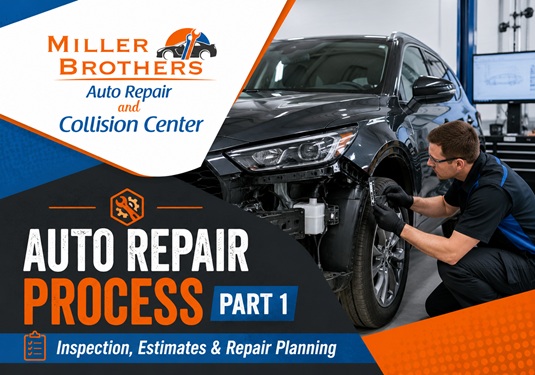
The auto repair process can feel uncertain after an accident, especially when you do not know how long the work may take or what technicians will inspect. This Part 1 guide explains the early stages of professional collision repair, from the initial assessment through repair planning.
Miller Brothers Transmission Auto Repair and Body Shop helps drivers understand what happens before physical repairs begin. Clear communication during these early stages can reduce surprises, support insurance coordination, and help vehicle owners make informed decisions.
How Long Does Auto Collision Repair Usually Take?
No single repair time applies to every damaged vehicle. A minor bumper repair may take only a few days, while structural damage, extensive paintwork, or delayed parts may extend the job for several weeks.
The collision repair timeline depends on the location and severity of the damage. Technician availability, insurance approvals, replacement parts, paint curing, and safety calibrations can also affect the expected completion date.
Common factors that influence repair time include:
- The number of damaged panels
- Frame or structural repairs
- Mechanical or suspension damage
- Replacement-part availability
- Insurance review times
- Paint preparation and curing
- Sensor scans and calibrations
- Final inspections and road testing
Therefore, the first completion estimate should serve as a working schedule rather than a guaranteed date. A dependable auto repair facility should update the owner when hidden damage, parts delays, or insurance decisions affect the schedule.
What Happens During a Professional Collision Repair Inspection?
A professional collision inspection begins with a careful review of the vehicle’s exterior. The technician checks for cracked lights, damaged panels, uneven body gaps, wheel problems, fluid leaks, and evidence that the impact traveled beyond the visible area.
Next, the technician may examine the underside of the vehicle. This review can include the suspension, steering system, frame, mounting points, exhaust components, and nearby mechanical parts.
Modern vehicles also contain many electronic safety features. As a result, technicians may perform diagnostic scans to identify fault codes involving airbags, parking sensors, cameras, radar units, or driver-assistance systems.
During the assessment, the repair team usually photographs and documents the damage. These records help the shop prepare an estimate and explain the necessary work to the vehicle owner or insurance company.
Why Hidden Damage Can Change the Repair Plan
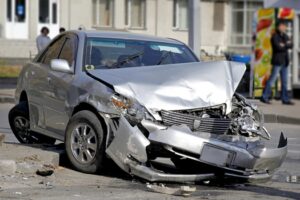
Knoxville auto shop
Accident damage often extends behind bumpers, fenders, trim pieces, and interior panels. A vehicle may appear to have only cosmetic damage even though brackets, wiring, sensors, supports, or structural parts have also been affected.
Technicians may need to remove damaged exterior components before they can determine the full scope of the repairs. Shops often call this step disassembly or teardown.
Once the damaged area is open, the team can compare the initial estimate with the vehicle’s actual condition. Newly discovered problems may require additional parts, labor, procedures, or insurance approval.
At this stage, Miller Brothers Transmission Auto Repair and Body Shop may prepare a supplement for the insurance company. A supplement documents damage that was not visible during the first estimate and explains why the repair plan must change.
Hidden damage does not always mean that someone made an error during the initial assessment. Many collision-related problems remain impossible to see until technicians remove the affected panels and components.
How the Auto Repair Process Turns an Estimate Into a Plan
An estimate lists the expected parts, materials, procedures, and labor needed to restore the vehicle. However, a complete repair plan also organizes the work in the correct order.
The team may divide the job into several stages:
- Vehicle disassembly
- Structural measurements
- Frame or body correction
- Mechanical repairs
- Panel replacement or refinishing
- Paint preparation
- Reassembly
- Electronic calibration
- Quality-control checks
This organized approach helps the team identify potential delays before they interrupt the job. It also ensures that technicians complete important safety procedures at the correct stage.
Professional collision repair services should follow manufacturer repair instructions when those procedures apply. These instructions may specify approved welding locations, replacement methods, adhesives, fasteners, measurements, and calibration requirements.
Following the correct procedure matters because modern vehicles use advanced steel, aluminum, composite materials, cameras, and computerized safety systems. A repair that looks acceptable from the outside may still create safety or performance concerns when technicians skip required steps.
Insurance Approval, Parts, and Pre-Repair Preparation
Insurance involvement can affect how quickly repairs begin. The insurer may request photographs, an adjuster’s review, a written estimate, or added documentation before approving certain procedures.
Sometimes the insurer’s estimate differs from the repair facility’s findings. In that situation, the shop may need to explain why additional labor, scans, replacement parts, or repair methods are necessary.
A reliable auto repair shop should explain who will communicate with the insurer and how often the customer will receive updates. Clear communication helps drivers understand whether a delay involves approval, parts, additional damage, or shop scheduling.
Before physical repairs begin, the team confirms the customer’s authorization and verifies the approved repair plan. Technicians may also review manufacturer procedures and identify any specialty tools or equipment needed for the job.
Replacement parts should be checked when they arrive. Incorrect, incomplete, or damaged components can prevent the repair from moving forward as planned.
The team may also verify paint codes, trim levels, wheel designs, sensor locations, and calibration requirements. Confirming these details early can reduce interruptions during refinishing and reassembly.
Choosing an experienced auto body shop in Knoxville TN can make these early steps easier to follow. Local experience may also help the repair team manage common insurer procedures and explain the process clearly to area drivers.
Vehicle owners can help prevent avoidable delays by responding quickly to authorization requests. They should also provide complete insurance information and remove personal belongings before leaving the vehicle.
Helpful questions to ask at drop-off include:
- Who will provide repair updates?
- How often will I receive an update?
- Are any necessary parts currently delayed?
- Could hidden damage affect the estimate?
- Will my vehicle require electronic scans?
- Are safety-system calibrations necessary?
- What inspections happen before delivery?
Drivers should also confirm whether the shop needs their approval before completing supplemental work. Quick responses can help the team continue repairs after discovering additional damage.
This Part 1 guide covered repair timing, professional inspections, hidden damage, estimates, insurance approval, and pre-repair preparation. Each step helps create a clear and accurate plan for restoring a damaged vehicle.
Stay tuned for Part 2 of this series, where we will continue explaining the collision repair process and what drivers should expect next.
After a collision, clear answers can make the repair experience less stressful. Call Miller Brothers Transmission Auto Repair and Body Shop to schedule an evaluation and learn what your vehicle may need before repairs begin.
Like our Facebook page for more great info about auto services.
Miller Brothers Auto Repair and Collision Center
7123 Tazewell Pike
Corryton, TN 37721
(865) 689-5072
https://www.millerbrosautorepair.com/
Serving Knoxville, TN and Knox County
Service areas include: All of Knox County, Corryton, Fountain City, Halls Crossroads, Powell and Knoxville