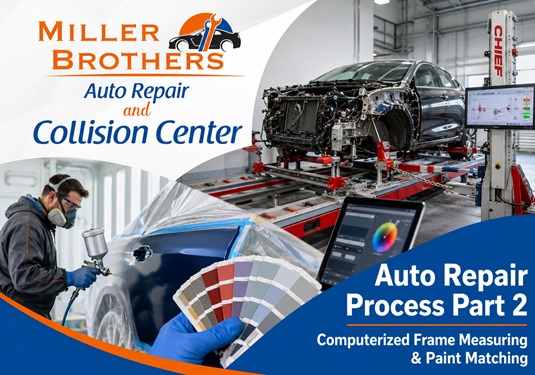
The auto repair process becomes much more precise once technicians begin restoring the vehicle’s structure and exterior finish. In Part 2, we explain how digital measuring equipment helps correct structural problems and why accurate paint color work matters after an accident.
Miller Brothers Transmission Auto Repair and Body Shop begins this stage by reviewing inspection results, approved repair plans, and manufacturer specifications. Careful planning helps technicians complete each repair in the correct order.
Part 1 of the Auto Repair Process explained what happens before hands-on repairs begin. It covered repair timelines, professional inspections, hidden damage, estimates, insurance approval, parts planning, and preparation.
Those early steps create a reliable foundation for the work that follows. Once the repair plan receives approval, technicians can begin correcting structural problems, repairing body panels, and preparing the vehicle for refinishing.
Why Vehicle Structure Matters During the Auto Repair Process
A vehicle’s frame or unibody structure provides support for the body, suspension, doors, safety systems, and other major components. Even a small shift can affect wheel alignment, tire wear, handling, and the way body panels fit.
Structural movement may not always be visible from outside the vehicle. A bumper cover may show only a small dent while the impact has moved mounting points or changed the position of the underlying structure.
Accurate structural restoration helps technicians:
- Return key measuring points to their correct locations
- Improve door, hood, and trunk alignment
- Support proper suspension geometry
- Restore even gaps between exterior panels
- Reduce pulling, drifting, or uneven tire wear
- Prepare the vehicle for safe reassembly
Auto mechanics in Knoxville TN should never rely only on visual judgment when structural movement may be present. Exact measurements provide the information needed to plan repairs and verify the results.
How Computerized Frame Measuring Works
Computerized frame measuring uses electronic sensors, lasers, cameras, or measuring probes to compare a vehicle’s current dimensions with manufacturer specifications. The system identifies points that sit too high, too low, too far forward, or too far to one side.
First, technicians position the vehicle on a frame rack or dedicated measuring platform. They then place targets or probes at selected reference points beneath and around the vehicle.
The software creates a digital map of those locations. It compares the measurements with factory data for the vehicle’s year, make, model, and body configuration.
This process can identify structural movement that technicians cannot see during a standard visual inspection. It also helps them determine the direction and amount of correction required.
How Digital Measurements Improve Structural Accuracy
Traditional measuring methods can still provide useful information. However, a computerized system often collects more data and shows differences in a clear digital format.
The technician can review measurements before pulling or straightening begins. This reduces guesswork and helps the repair team develop a controlled plan.
During the correction, the system can track changes in real time. Technicians can see whether each reference point is moving toward its factory position.
Miller Brothers Transmission Auto Repair and Body Shop uses accurate repair information to help restore proper vehicle dimensions. That level of precision is important because several millimeters of movement may affect panel fit or suspension alignment.
Digital reports also create a record of the measurements. Depending on the repair and system used, the shop may compare pre-repair and post-repair data to confirm that key points have returned to specification.
What Happens When Measurements Show Structural Movement?
When the measuring system identifies a problem, technicians review the direction and severity of the movement. They also inspect nearby parts to determine whether repair or replacement offers the best result.
The vehicle may remain secured to a frame rack while hydraulic equipment applies controlled force. Technicians make gradual adjustments instead of trying to correct the structure with one large pull.
They measure the vehicle throughout the procedure. This repeated checking helps prevent overcorrection and confirms that each adjustment produces the intended result.
Some structural parts can be straightened according to approved procedures. Others may require replacement, especially when the metal has torn, weakened, sharply folded, or moved beyond the manufacturer’s repair limits.
The repair team must also consider nearby welds, seams, mounting points, and corrosion protection. Restoring the dimensions is only one part of completing reliable collision repairs.
Why Accurate Measurements Affect More Than the Frame
Structural accuracy affects many parts of the vehicle. A shifted mounting point can create problems that appear unrelated to the original impact.
For example, incorrect dimensions may cause:
- A door to stick or close unevenly
- A hood to sit higher on one side
- Headlights to point in different directions
- A bumper to leave uneven gaps
- Suspension parts to sit out of position
- Driver-assistance sensors to lose alignment
Modern vehicles often place cameras, radar units, and impact sensors behind exterior panels. Therefore, proper positioning may affect the operation of advanced safety features.
Technicians may need to complete wheel alignment, system scans, or electronic calibrations after structural and body repairs. These steps depend on the vehicle, the affected systems, and manufacturer requirements.
Why Paint Matching Matters After Collision Repair
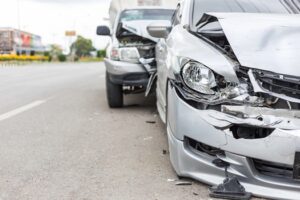
Collision repairs in Knoxville TN
Auto paint matching helps repaired panels blend with the rest of the vehicle instead of looking noticeably different. Even when technicians use the correct factory paint code, several factors can change how the final color appears.
Sun exposure, weather, washing products, age, and previous refinishing can slightly change the existing finish. In addition, many factory colors include metallic flakes, pearls, or multiple layers that react differently under changing light.
A skilled refinishing technician considers:
- The manufacturer’s paint code
- Alternate color formulas
- The age and condition of the existing finish
- Metallic or pearl particle orientation
- Spray pressure and application technique
- Temperature and humidity
- The number and thickness of paint layers
The technician may spray test cards before applying color to the vehicle. These samples allow the technician to compare formulas and application methods beside the existing finish.
How Blending Creates a More Consistent Finish
In some cases, applying paint only to the repaired panel may create a visible edge between the new color and the original finish. Blending helps create a smoother transition across nearby areas.
For example, a repaired front fender may require color blending into the front door. The technician gradually reduces the amount of color before applying clear coat across the prepared area.
This method helps the eye see one consistent finish rather than two slightly different colors. The exact approach depends on the paint formula, panel location, vehicle condition, and repair plan.
Proper surface preparation also affects the final appearance. Technicians must clean, sand, prime, seal, and mask the area before applying the color and protective clear coat.
Paint Quality Depends on Careful Preparation
Paint cannot hide poor bodywork or damaged surfaces. Dents, scratches, sanding marks, dust, and uneven primer can remain visible after refinishing if technicians do not correct them first.
Before painting, the auto repair team checks the panel shape and confirms that edges, body lines, and gaps look correct. The surface must feel smooth and remain free of wax, grease, moisture, and other contaminants.
The vehicle then enters a controlled paint area or spray booth. Proper airflow and filtration help reduce dust while controlled temperatures support consistent curing.
After the finish dries, technicians inspect it under suitable lighting. They look for color differences, uneven texture, dirt particles, runs, dry areas, and other imperfections.
Insurance Approval and Repair Documentation
Repair plans may change after technicians remove damaged panels and inspect hidden areas. When this happens, the shop may prepare a supplemental estimate with photos, measurements, and supporting documentation.
Clear records can help explain why additional labor, parts, or procedures are necessary. This documentation may also support communication involving auto collision repair insurance and claims.
Insurance approval does not replace the technician’s responsibility to follow safe repair methods. The shop must still consider manufacturer procedures, part condition, structural measurements, and the vehicle’s specific needs.
The extent of collision damage determines which repairs, replacement parts, refinishing steps, scans, and calibrations may be required. Two vehicles with similar exterior dents may need very different repair plans underneath.
Final Checks Before Reassembly and Delivery
After structural work and refinishing, technicians begin putting the vehicle back together. They reinstall lights, trim, glass, handles, sensors, interior pieces, and other removed components.
The team then checks panel gaps, fasteners, electrical connections, warning lights, and repaired surfaces. Depending on the work performed, technicians may also complete an alignment, road test, diagnostic scan, or safety-system calibration.
Miller Brothers Transmission Auto Repair and Body Shop reviews repaired areas before returning the vehicle to the customer. These final checks help confirm that the vehicle looks right, functions correctly, and meets the repair plan.
Precise structural measurements and professional refinishing can make a major difference after an accident. They help restore vehicle alignment, exterior appearance, component fit, and driving performance.
Call Miller Brothers Transmission Auto Repair and Body Shop to discuss your vehicle’s repair needs. An experienced team can inspect the damage, explain the recommended work, and guide you through each stage of the repair.
Like our Facebook page for more great info about auto services.
Miller Brothers Auto Repair and Collision Center
7123 Tazewell Pike
Corryton, TN 37721
(865) 689-5072
https://www.millerbrosautorepair.com/
Serving Knoxville, TN and Knox County
Service areas include: All of Knox County, Corryton, Fountain City, Halls Crossroads, Powell and Knoxville