Collision damage can affect far more than the visible surface of your vehicle. Even when the doors still open and the car seems to drive normally, the impact may have shifted structural parts, damaged safety equipment, or weakened components behind the exterior panels.
Miller Brothers Transmission Auto Repair and Body Shop helps drivers understand these risks before small concerns become larger problems. A professional inspection provides clear answers and helps determine which repairs will restore safe operation.
What Happens During Structural Collision Repair?
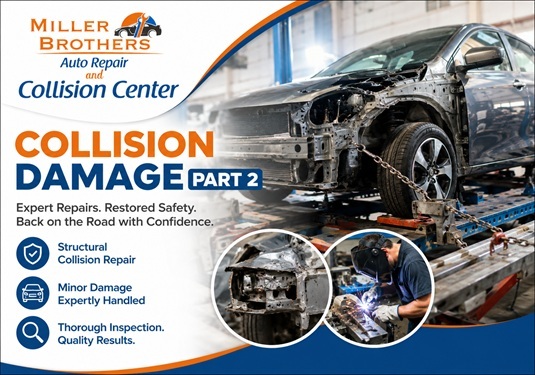
Structural collision repair restores damaged areas that support the vehicle’s body, suspension, and passenger compartment. Modern vehicles often use a unibody design, which means the frame and body work together as one structure.
Because of this design, an impact in one area can transfer force across several sections. A damaged front corner, for example, may affect the apron, radiator support, suspension mounting points, or door openings.
The Initial Damage Inspection
The process begins with a detailed visual and mechanical inspection. Technicians look for bent metal, uneven panel gaps, cracked seams, tire damage, fluid leaks, and changes in how the doors or trunk close.
However, visual checks alone cannot reveal every structural problem. Therefore, technicians may also inspect the underside and remove exterior panels to find damage hidden behind bumpers, fenders, or trim.
Warning signs of structural movement can include:
- A steering wheel that no longer sits straight
- Uneven tire wear after the accident
- Doors that stick or fail to close correctly
- New vibrations while driving
- Gaps between body panels
- A vehicle that pulls to one side
- Unusual noises from the suspension
Although these symptoms can have several causes, they should never be ignored after an accident. Prompt testing can prevent further wear and help technicians create a complete repair plan.
Measuring the Vehicle Structure
Next, technicians compare key measuring points with the vehicle manufacturer’s specifications. Digital measuring systems can show whether a rail, pillar, floor section, or mounting point has moved.
Accurate measurements matter because even a small shift can change wheel alignment or suspension geometry. In addition, incorrect dimensions may affect how energy travels through the vehicle during another accident.
The technician records the results and identifies which areas need correction. This information also helps the repair facility document hidden problems for the vehicle owner or insurance provider.
Straightening and Replacing Damaged Parts
Technicians may place the vehicle on specialized equipment when straightening is possible. Controlled pulling force moves the affected areas toward their correct factory measurements.
However, not every damaged section should be straightened. Severely crushed, stretched, torn, or weakened metal may require replacement to provide a dependable result.
During this stage, the team may:
- Remove damaged structural sections
- Weld or bond approved replacement parts
- Repair mounting points
- Restore panel alignment
- Check suspension attachment areas
- Protect repaired metal against corrosion
Repair procedures vary by make and model. Therefore, technicians must follow the correct repair information rather than relying on one method for every vehicle.
Alignment and Safety System Checks
After the structure returns to the proper measurements, technicians check wheel alignment and handling. A correct body measurement does not always guarantee that the wheels, steering, and suspension sit correctly.
Modern vehicles may also have cameras, radar units, parking sensors, and driver-assistance features. When an impact or repair changes their position, these systems may need calibration before the vehicle returns to normal use.
Finally, the team checks panel fit, road performance, warning lights, and repair quality. These final steps help confirm that the car looks right, drives correctly, and supports its safety systems.
Does Minor Damage Really Need Professional Attention?

collision damage repair in Knoxville TN
A low-speed impact may leave only a scratch, dent, or loose bumper cover. Yet minor collision repair can still be important because the outer panel does not show what happened underneath.
Bumpers often contain brackets, reinforcement bars, foam absorbers, wiring, and sensors. While the plastic cover may return to its original shape, the parts behind it can remain cracked or compressed.
In addition, a small impact may break clips or push a panel out of position. Water can then enter exposed seams, while bare metal can begin to rust.
Hidden Problems Behind Cosmetic Marks
Paint damage may seem harmless at first. However, a deep scratch can expose primer or metal and allow moisture to reach the surface.
A dent near a body line can also stretch the metal. As a result, a simple surface repair may not fully restore the panel unless a technician checks its shape and strength.
Other hidden concerns may include:
- Cracked bumper supports
- Bent mounting brackets
- Damaged parking sensors
- Broken headlight tabs
- Loose wheel-well liners
- Misaligned hoods or trunks
- Pinched wiring
- Small leaks near the radiator
These problems may worsen through daily driving, vibration, rain, and temperature changes. Therefore, an early inspection often reduces the chance of a larger repair later.
When a Vehicle Should Not Be Driven
Some accident symptoms require immediate attention. Do not continue driving when you notice leaking fluids, tire contact with the body, severe pulling, smoke, broken lights, or difficulty steering.
You should also stop if a warning light appears after the crash. The vehicle may have a problem with the airbags, brakes, engine cooling system, or electronic safety features.
When you feel uncertain, towing offers a safer choice than testing the car on the road. A professional can then determine whether the problem involves body work, mechanical repairs, or both.
Why a Complete Repair Plan Matters
Quality collision repair should address the full effect of an impact, not just the most visible dent. A complete plan considers structural measurements, body panels, paint, suspension, electronics, alignment, and safety equipment.
This approach also supports related auto repair services when the accident affects cooling components, steering parts, brakes, or electrical systems. Handling these connected concerns together can reduce repeat visits and help restore reliable performance.
Miller Brothers Transmission Auto Repair and Body Shop examines visible and hidden areas before recommending work. During the repair process, the team can also update the estimate when teardown reveals damage that could not be seen during the first inspection.
Repairing Damage Now Can Prevent Added Costs
Delaying service can allow a loose part to damage nearby components. For example, a bent wheel liner may rub against a tire, while a small cooling-system leak may lead to overheating.
Exposed metal may also develop corrosion. Once rust spreads beneath the paint, technicians may need to repair a larger area than they would have treated soon after the accident.
Prompt auto repair after a car crash also helps preserve documentation. Photos, measurements, estimates, and inspection notes create a clearer record of which problems resulted from the impact.
Choosing the Right Repair Facility
Choose a facility that looks beyond surface appearance. The team should explain the inspection, identify possible hidden concerns, and describe why each repair is needed.
Before authorizing work, consider asking:
- Will the vehicle receive structural measurements?
- Will technicians inspect behind damaged panels?
- Are alignment checks included when needed?
- Will safety sensors require calibration?
- How will newly discovered damage be documented?
- What final checks will occur before delivery?
Clear answers help you understand the scope of work. They also make it easier to compare estimates based on repair quality rather than price alone.
Miller Brothers Transmission Auto Repair and Body Shop provides accident inspections and coordinated repair solutions for drivers in the Knoxville area. The team focuses on restoring appearance, performance, and safety so customers can return to the road with greater confidence.
Do not assume a small dent is only cosmetic or that a drivable vehicle has no structural problems. Schedule an inspection with Miller Brothers Transmission Auto Repair and Body Shop to identify hidden concerns, understand your repair options, and begin the right repair process.
Like our Facebook page for more great info about auto services.
Miller Brothers Auto Repair and Collision Center
7123 Tazewell Pike
Corryton, TN 37721
(865) 689-5072
https://www.millerbrosautorepair.com/
Serving Knoxville, TN and Knox County
Service areas include: All of Knox County, Corryton, Fountain City, Halls Crossroads, Powell and Knoxville